
Dental Implants Richardson
A Superior Solution for Addressing Tooth Loss
When it comes to replacing missing teeth, dental implants are often considered the gold standard and are in a class of their own. It’s the only treatment option capable of restoring an entire tooth from root to crown, helping patients enjoy unmatched aesthetics, strength, function, and longevity all at the same time. To learn more about implants and what they could mean for the future of your smile, contact our Richardson office today.
Why Choose Dentistry By Canyon Creek for Dental Implants?
- Dental Implants Placed & Restored Under One Roof
- Advanced Dental Technology Ensures Lasting Results
- Several Flexible Financing Options Available
What Are Dental Implants?
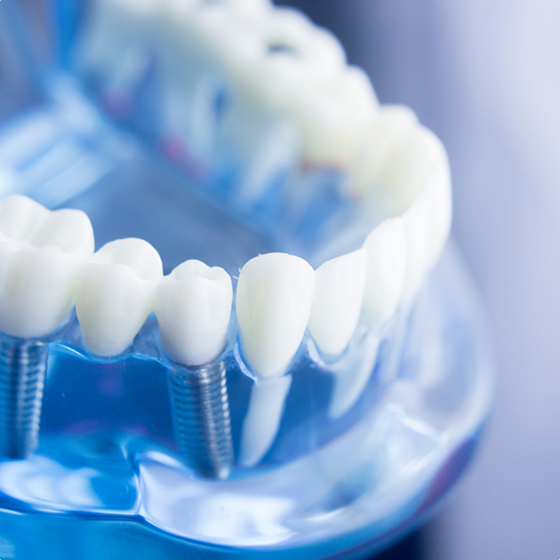
Unlike traditional dentures and bridges that just sit atop the gums, dental implants take it a step further by recreating the entire structure of one or more missing teeth. The implant itself is a titanium post that we surgically insert into your jaw, replicating the root of your tooth. After placement, the post becomes one with your jawbone in a process called osseointegration. Then, a metal attachment called an abutment is placed, allowing us to secure your replacement tooth or teeth into place.
Dental implants are the only tooth replacement solution that can do this, and it’s what helps them to feel, function, and look just as natural as your original pearly whites. For these reasons and many more, our dentists tend to recommend dental implants for all qualified patients.
Who Dental Implants Can Help

You only need three things to be a candidate for implants: good dental health, stable overall health, and a healthy jawbone to safely support the new roots. Our team will carefully examine your smile during your consultation and confirm these things. Once you have been approved for the treatment, the kind of restoration we place on top of your implant(s) will be based on your particular situation:
-
Missing One Tooth
Instead of altering two healthy teeth to support a bridge, like we would have in the past, we can now position a single implant root and crown in the gap between two teeth without disturbing them at all. -
Missing Multiple Teeth
Multiple dental implant crowns and even an implant partial denture can replace nonconsecutive missing teeth throughout the mouth, but for patients with more than one missing tooth in a row, just two implants can be used to support a bridge. -
Missing All Teeth
Four to six strategically-placed implants can be used to bring back an entire row of teeth at the same time. Because implant prosthetics are secured directly to the jawbone, they don’t slip and slide around the mouth like traditional removable dentures, plus they bring back much of a patient’s original bite force.
Benefits of Dental Implants

Are you curious why dental implants are considered the gold standard in tooth replacement? If so, you’re in the right place! In this section, we’re sharing a few of the day-to-day, health, and long-term benefits that come with this state-of-the-art solution.
Day-to-Day Benefits

Once you’ve healed from the procedure, you’ll enjoy the following benefits:
- A Lifelike Appearance – Dental implants are always topped with custom-made porcelain restorations designed to look, feel, and function like your original teeth. Additionally, they don’t require extra attachments to keep them stable.
- Clearer Communication – Even just one missing tooth can completely change your speaking patterns. Fortunately, we can replace one, a few, or an entire arch with dental implants, helping you to enunciate clearly again in the process.
- Unmatched Stability – Unlike other tooth-replacement options, dental implants bring back the whole tooth, both above and below the gumline. As a result, patients can trust their implant to always stay in place as they go about their day.
Health Benefits

In addition to improving your day-to-day life, rebuilding your smile with dental implants in Richardson can benefit your health in several ways, including:
- They Prevent Dental Drift – One consequence of tooth loss that often isn’t talked about is dental drift. This is when the teeth surrounding the gap shift, leading to premature wear, jaw pain, and other consequences. Fortunately, dental implants can prevent that from happening!
- They Allow You to Eat Well-Balanced Meals – Oftentimes, patients who are struggling with tooth loss are limited to soft foods, like applesauce. With dental implants, we can restore 80% of your bite strength, allowing you to eat a more satiating, healthy, and well-balanced diet.
- They Preserve the Jawbone – Implants not only replace the teeth, but they also help preserve the jawbone. They stimulate renewed blood flow to the area to keep it strong, maintaining the foundation for the remaining teeth while also protecting the overall shape of a patient’s face.
Long-Term Benefits
Finally, both patients and dentists alike love dental implants because they offer the following long-term benefits:
- A High Success Rate – In short, dental implants have a 90 – 95% success rate, even after 10 years. To ensure our patients enjoy their new and improved smiles, we complete a comprehensive oral exam upfront and provide helpful aftercare instructions for the recovery period.
- Easy Maintenance – While some tooth-replacement solutions require special cleaning products, dental implants do not! All you need to do is commit to a solid oral hygiene regimen at home and come to our office every six months for a checkup and cleaning.
- A Long Lifespan – With the right habits in place (i.e., brushing twice a day, wearing a mouthguard during sports, scheduling a dental checkup twice a year), dental implants can be trusted to last for multiple decades or even a lifetime.
Understanding the Cost of Dental Implants

As the gold standard of tooth replacement, dental implants can have a sizable price tag. You'll naturally want to learn the latter before you fully commit to treatment. With that said, the cost of dental implants in Richardson varies; you'll have to consult our team to get a precise estimate. Only then can we outline your care's pricing factors, the role of dental insurance, etc. For further details, please keep reading or call us in the coming days!
Preliminary Treatments & Dental Implant Surgery
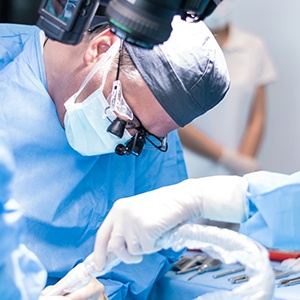
There’s a chance you’ll need “preliminary care” before you can get dental implants. If so, the required periodontal therapy, tooth extraction, etc., will add to your final treatment price. You needn't worry about the increased cost, though; the added procedures would ensure your implants' success. Most dental plans also cover such services to some extent.
Implant surgery also incurs its own expense, with its cost dependent on implant location, your need for sedation, and even the dentist’s skill. However, rest assured that the surgery is worthwhile; the local specialists we partner with have immense expertise.
The Parts of Your Dental Implant
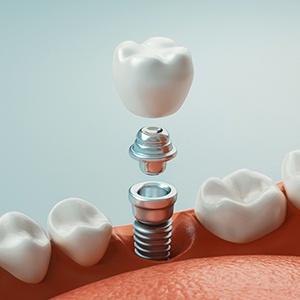
The treatment cost is also shaped by the parts of your dental implant, which include:
- Implant Number – Naturally, it costs more to place several implants than to just place one.
- Implant Size/Material – Your implant’s price will partly depend on its size and material. A long post will cost more than a short one, and Zirconia posts are pricier than titanium posts.
- Implant Brand – Since different companies make dental implants differently, your implant’s brand (or manufacturer) will also affect its cost.
- Final Restoration Type – The final restoration for your implant will strongly influence whether it has a high or low price. Indeed, devices like dental bridges, dental crowns, and implant dentures have distinct costs.
How Dental Implants Can Save You Money
Even with their high upfront price, dental implants make for great long-term investments. Getting them would save you plenty of money over time.
It comes down to implants’ natural longevity. Since the posts can work for 15-20 years (or 30 years if well-maintained), they hardly ever need follow-up repairs or replacements. That means your implants would save you money otherwise spent on fixing dentures, dental bridges, etc.
Does My Dental Insurance Cover Dental Implants?
Dental insurance doesn’t usually cover dental implants, as it often sees the posts as medically unnecessary. Still, there are always exceptions; you should still confirm your plan’s details beforehand. If you want to contact your insurance provider, our team can even help you do so.
Making Dental Implants Affordable
As it happens, you don’t need dental insurance to make dental implants affordable. Plaisance & Bostick Family Dentistry offers several excellent payment options, which would make your care much more affordable.
Chief among these options is our office’s Dental Savings Plan. By paying a flat fee of $289, a patient can get – among other things – a 20% discount on dental implant treatment. This price reduction can potentially make an otherwise unaffordable procedure fit your budget.
Dental implants don’t need to “break the bank,” so please visit us soon. We’ll work with you to provide a treatment that meets your financial needs!
Dental Implant FAQs
How Long Do Dental Implants Last?
One reason that dental implants are a step above the rest is that they can last for 30 years or more with the proper maintenance. That starts with daily habits, like brushing, flossing, and rinsing with mouthwash. It’s also crucial to schedule an appointment at our office every six months so we can catch any issues that do arise in the early stages, including oral cancer and peri-implantitis.
How Successful Are Dental Implants?
Dental implants have an impressive success rate of over 95% for non-smoking patients. So, if you are ready to face tooth loss head-on and are looking for a long-lasting solution, you should schedule an appointment at our office! The sooner you do, the sooner we can determine if you’re a good candidate for dental implants, and, if you are, share what steps you can take to make them last.
Am I Too Old to Get Dental Implants?
If you’re in your 70s or 80s, you might assume that you’re “too old” to rebuild your smile with dental implants in Richardson. In reality, there isn’t an upper age limit! Instead, candidacy is determined by factors like the density of your jawbone and the health of your gums.
Will I Have to Take Off Work for Dental Implant Surgery?
Patients are encouraged to dedicate at least a day or two to recovering. With that said, there are some cases where we recommend taking more time off, including if you have a physically demanding job. Conversely, you may not need to take any time off if you have an office job and schedule the procedure on a Friday afternoon.
Do Dental Implants Decay?
No, dental implants cannot decay. However, that doesn’t mean you can let your oral hygiene regimen slip. After all, any natural teeth you have can still decay, and the gums supporting your dental implants can develop an infection. For that reason, it’s extremely important that you prioritize healthy habits, like scheduling an appointment with our implant dentist in Richardson every six months.
Is There Anything I Shouldn’t Eat with Dental Implants?
Immediately following the procedure, you will need to stick to a liquid and soft foods diet. Once you’ve healed and your restoration is securely in place, you’ll be able to resume your usual diet. Just keep in mind that, like your natural teeth, your dental implant can break with enough pressure. So, it’s best to exercise caution with extremely crunchy foods, like raw almonds, hard pretzels, and peanut brittle.
How Can I Make Dental Implants More Affordable?
Sometimes, patients are deterred by the price of dental implants. However, as we touched on above, they can last for several decades with the proper care and maintenance. As a result, they often end up being the most cost-effective option in the long run. Plus, our team at Dentistry By Canyon Creek welcomes several dental insurance providers as well as flexible payment plans with CareCredit.